Business & Finance
Books in Business & Finance
Business & Finance
Business, leadership, economics, personal finance, productivity — how value is created and managed.
Books in this domain
-
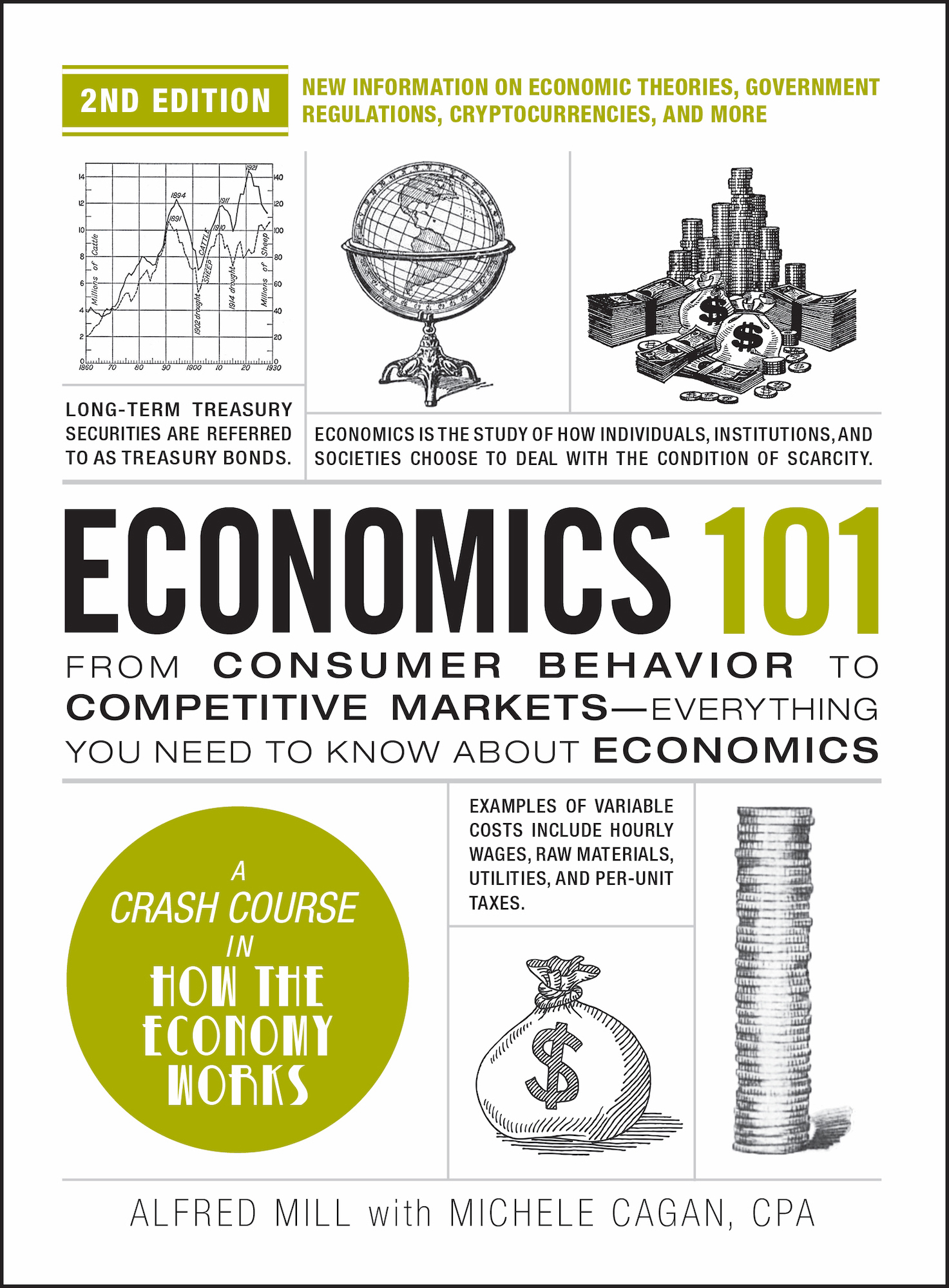
Economics 101 — Economics 101
A chapter-by-chapter synthesis of Alfred Mill & Michele Cagan’s Economics 101 — from scarcity and trade-offs through markets, money, GDP, inflation, monetary and fiscal policy.
-
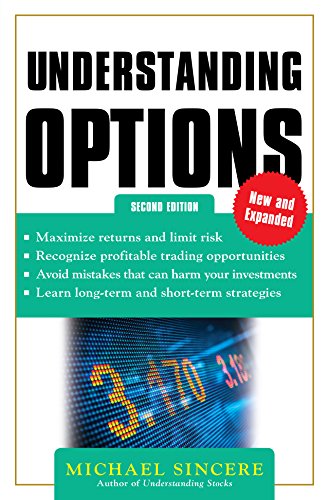
Understanding Options 2E — Book Summary — Understanding Options 2E
A clear, strategy-by-strategy guide to options trading for individual investors — from covered calls and protective puts to spreads, straddles, and the Greeks.
Categories
Concepts
- Aggregate Demand
- Options Assignment
- Black-Scholes Model
- Business Cycle
- Calendar Spread
- Comparative Advantage
- Covered Call
- Defined Risk
- Delta
- Elasticity
- Exchange Rates
- Externalities
- Fiscal Policy
- Fractional Reserve Banking
- Game Theory
- Gross Domestic Product
- Hedging
- Implied Volatility
- Inflation
- Interest Rates
- Iron Condor
- LEAPS (Long-Term Equity Anticipation Securities)
- Marginal Analysis
- Market Failure
- Monetary Policy
- Money Supply
- Monopoly
- Oligopoly
- Opportunity Cost
- Options Trading
- Perfect Competition
- Portfolio Hedging
- Production Function
- Protective Put
- Public Goods
- Scarcity
- Supply and Demand
- Time Decay (Theta)
- Time Value of Money
- Unemployment
Recent chapters
-
Chapter 1: What Is Economics? — Economics 101
Economics is the study of how individuals, firms, and societies choose under scarcity — the universal condition that nothing is ever enough to satisfy all wants. This chapter unpacks the field’s basic vocabulary: factors of production, micro vs. macro, and the allocation problem that everything else builds on.
-
Chapter 2: Trade-Offs and Opportunity Cost — Economics 101
Every choice has a price tag, even when no money changes hands. This chapter introduces opportunity cost (the next-best alternative you gave up), marginal analysis (compare one more unit’s benefit to its cost), and the three core assumptions that classical economics quietly relies on.
-
Chapter 3: The Emergence of Free Trade and the Importance of Comparative Advantage — Economics 101
Why specialization plus exchange beats self-sufficiency — even when one party is better at producing everything. This chapter walks through mercantilism’s failure, Adam Smith’s case for free trade, and David Ricardo’s deeper insight: it is comparative advantage (lowest opportunity cost), not absolute advantage, that determines who should produce what.
-
Chapter 4: International Trade and Trade Barriers — Economics 101
Free trade creates wealth — but politics keeps building walls in front of it. This chapter covers why voluntary trade is positive-sum, the post-WWII institutions (GATT, WTO, IMF, World Bank) built to keep it open, and the three classic tools countries use to push back: tariffs, quotas, and embargoes.
-
Chapter 5: Traditional, Command, and Market Economies — Economics 101
Every society must answer three economic questions — what to produce, how to produce it, and for whom. The three pure answers are tradition (do as our ancestors did), command (a central authority decides), and markets (let individual buyers and sellers decide). Each has a track record. Pure forms barely exist; almost every modern economy is a hybrid.
-
Chapter 6: Modern Economic Theories — Economics 101
Classical economics assumes rational actors in efficient markets. Three modern theories — Minsky’s Financial Instability Hypothesis, New Growth Theory, and Kahneman & Tversky’s Prospect Theory — explain what classical models miss: why stable markets breed crashes, why human capital is the real engine of growth, and why people systematically reject equivalent gains framed as losses.
-
Chapter 7: Information and Behavioral Economics — Economics 101
Classical economics assumes perfect information and perfectly rational actors. The two new schools that replaced those assumptions — information economics (Stiglitz, Akerlof) and behavioral economics (Simon, Becker, Thaler) — explain how real markets cope with information gaps and human cognition, from used-car lemons to checkout-aisle candy.
-
Chapter 8: Capitalism Versus Socialism — Economics 101
Pure command and pure market systems don’t exist in the real world. What actually exists is hybrids — capitalism and socialism — that differ in how much the government owns, regulates, and redistributes. Behind the debate sit Adam Smith and Karl Marx, with rival views of human nature that still drive modern policy arguments.
-
Chapter 9: Barter and the Development of Money — Economics 101
Why barter doesn’t scale, what jobs money actually does, and how currency evolved from commodity to representative paper to inconvertible fiat — with the gold standard as the pivotal compromise in the middle.
-
Chapter 10: Inconvertible Fiat Explored — Economics 101
Modern money is backed by nothing but faith — that’s a feature, not a bug. How inconvertible fiat lets the money supply grow with the economy, why inflation is the price of that flexibility, and what the Fed’s M1 and M2 measures actually track.
-
Chapter 11: The Time Value of Money and Interest Rates — Economics 101
A dollar today is worth more than a dollar tomorrow — and that simple fact builds every interest rate you’ll ever encounter. The five-block stack: real rate, expected inflation, default risk, liquidity, and maturity premiums.
-
Chapter 12: A Brief History of Banking — Economics 101
Banks aren’t vaults — they’re money factories. How banking evolved from Mesopotamian grain receipts to fractional-reserve goldsmiths to the modern system, and the surprising accounting trick by which a single deposit turns into many.
Top tags
- options (29)
- trading (24)
- investment (9)
- volatility (7)
- risk-management (7)
- inflation (6)
- interest-rates (6)
- fiscal-policy (6)
- covered-calls (6)
- macroeconomics (5)
- federal-reserve (5)
- monetary-policy (5)
Jump to…
Type to filter; press Enter to open