US Constitution 101
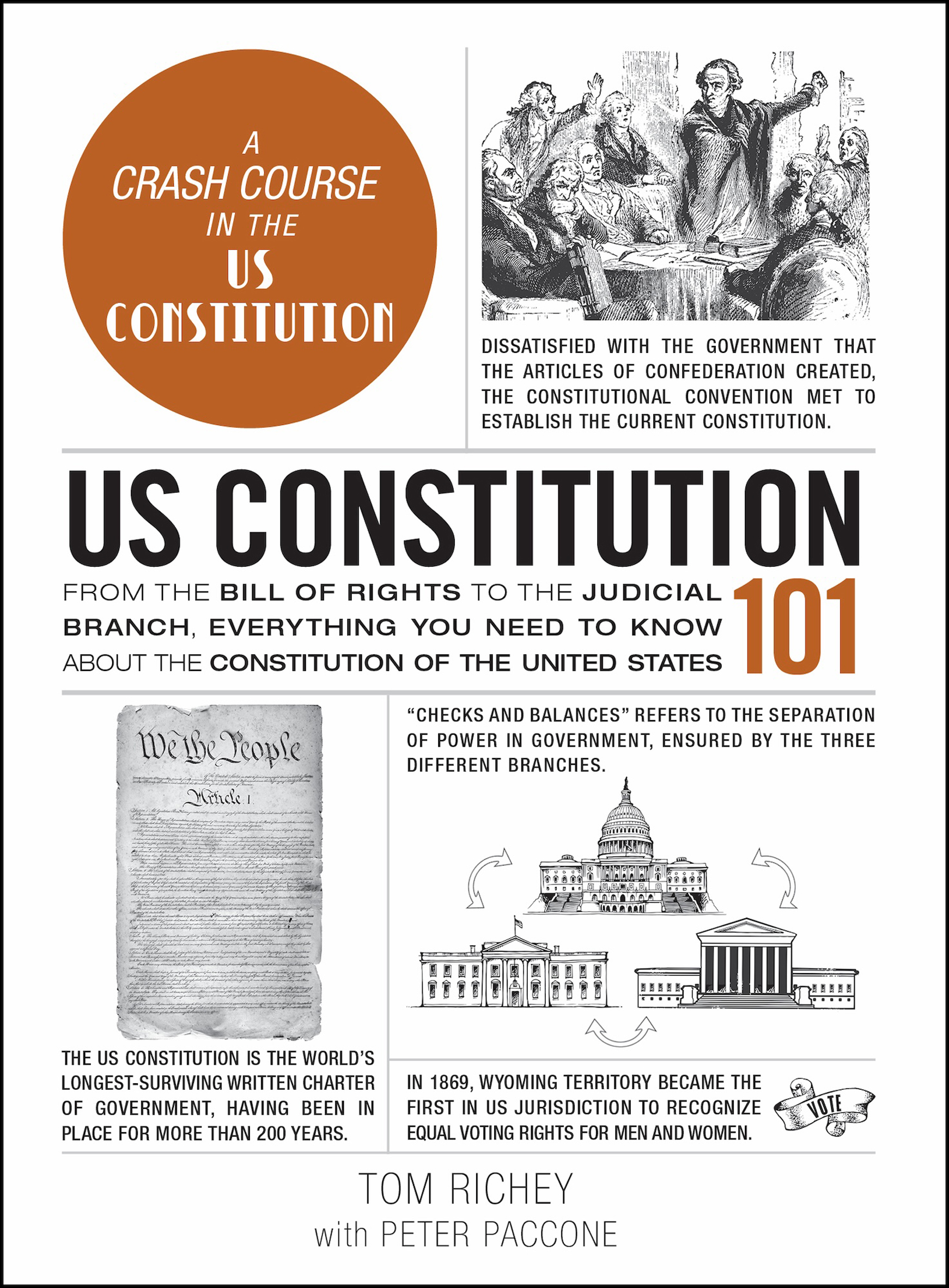
What this book is
A short, structured introduction to the United States Constitution — its history, its structure, and the principles that hold it together. Richey & Paccone teach civics for a living; the book trades scholarly depth for clarity, sequence, and connection to current events. It assumes no legal background and produces something rare: a reader who can locate the constitutional hinge of almost any political dispute.
The shape of the argument
Read it as: Chapter 1 grounds the whole book. From there, three branch chapters (Legislative, Executive, Judicial) describe federal authority, while Chapter 2 cuts across them by adding individual-rights limits. Chapter 6 ties everything back together as the structural rules of the federation.
The book moves from origins (Ch 1), to the promises the Constitution makes to individuals (Ch 2), through each of the three branches (Chs 3–5), and finally to the structural rules that bind the federation together (Ch 6).
Executive summary
The Constitution is a negotiated political settlement, not a philosophical treatise. Every provision answers a specific fear — fear of monarchy, fear of mob rule, fear of consolidated central power, fear of small states being overwhelmed by large ones. Read in this light, the document’s idiosyncrasies (the Senate, the Electoral College, the Three-Fifths Compromise, the hard amendment process) become legible.
The three fears (in one paragraph)
Fear of monarchy gave the executive limited terms, removable through impeachment, with no titles of nobility. Fear of mob rule gave the Senate longer terms and (originally) indirect election, gave the judiciary life tenure, and put the most fundamental rights beyond simple majority change. Fear of consolidated central power produced enumerated federal authority, reserved state authority (10th Amendment), and the structural separation of powers.
Three structural choices that recur throughout
- Federalism — divide sovereignty between national and state governments so that no single locus of power can dominate.
- Separation of powers — split federal authority across three branches so that each can check the others.
- Enumerated and limited powers — the federal government has only the powers it is granted, plus those “necessary and proper” to execute them.
Three later additions that reshape it
- The Bill of Rights (1791) — explicit limits on federal power.
- The Reconstruction amendments (1865–1870) — abolish slavery, extend due process and equal protection to state action, prohibit racial discrimination in voting.
- Judicial review (Marbury, 1803) — not in the text, but built on it; the power that makes the Constitution self-enforcing.
Who this is for
Read this if you want to:
- Understand why current political fights about federalism, executive orders, court packing, and amendment proposals are structured the way they are.
- Locate the constitutional hinge of any Supreme Court case in under a minute.
- Stop being intimidated by legal jargon — most of it is just labels for fairly simple distinctions.
- Build a working mental model of the US government that you can extend with deeper reading later.
Chapter index
How to read these summaries
Each chapter follows the same structure: core idea → why it matters → key takeaways → mental models (Mermaid diagrams) → practical application → worked example → caveats → related material. Skip around — chapters do not need to be read in order, though Chapter 1 grounds everything else.
Concept companions
Jump to…
Type to filter; press Enter to open